Skip to content
resoluna.

AI Solutions PM

An instructional designer who ships products by working with AI.

I define the problem, set the constraints and make the trade-offs; AI turns those decisions into code. This site shows the judgment behind each case, how the work was split between me and AI, and how user feedback drove each iteration.

1
Cases
87
Real users
5
Decisions logged
All cases →
Live2026-04 – 2026-08

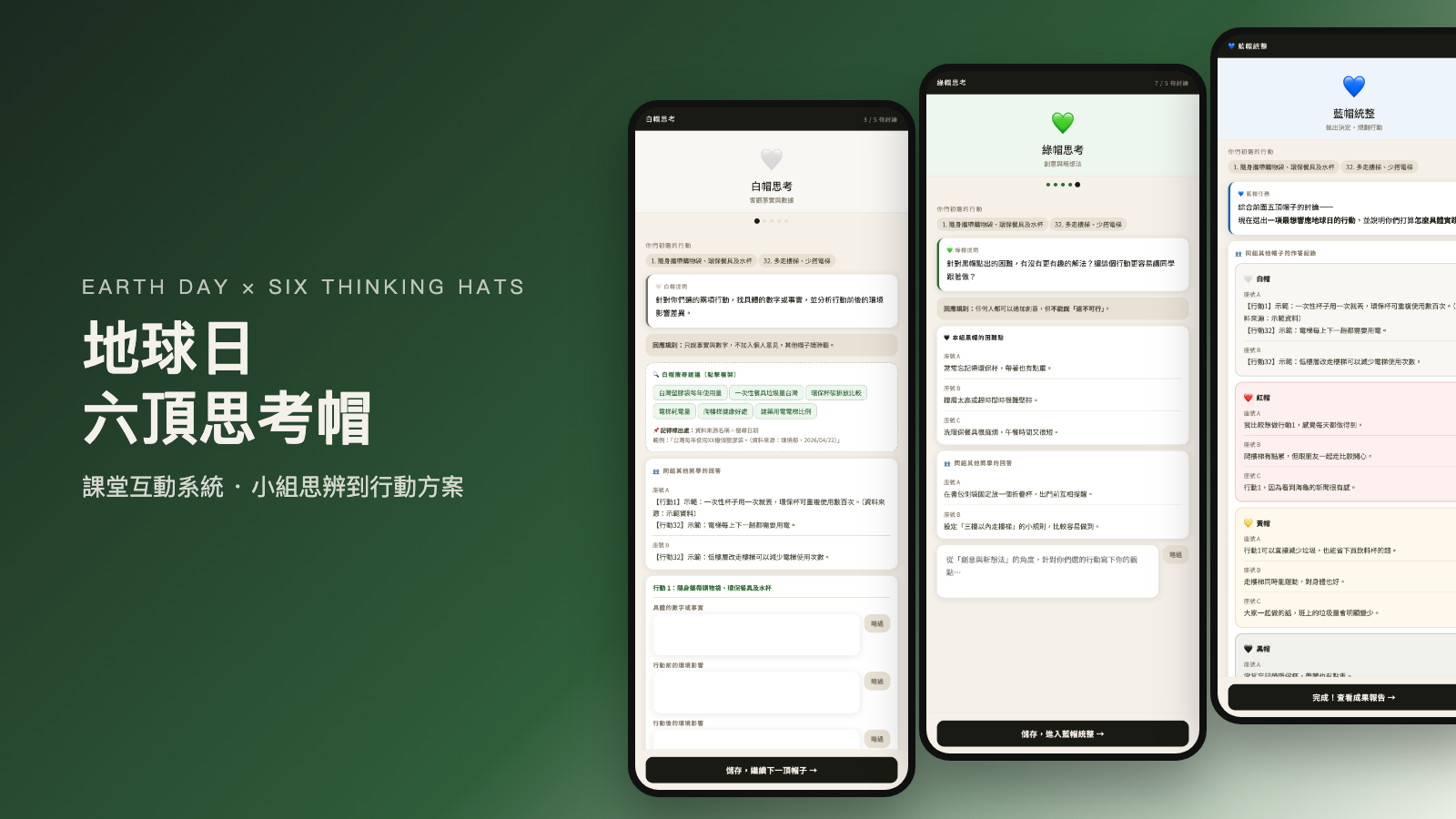
Earth Day × Six Thinking Hats

A classroom tool that builds Six Thinking Hats into group discussion, iterated live on classroom feedback

My role:Product & instructional design, requirements; built with Claude

87
Students · About 87 seventh graders
3
Classes · Three homerooms

How I work with AI

Every case records what I decided, what AI did, and what came of it. Across projects, the same method shows up.

  1. Earth Day × Six Thinking Hats ·Changing product rules from classroom observation

    What I decided

    After teaching with it, I dropped one-hat-per-student for whole-group answering with Pass, split white hat into specific fields, and asked for answer editing in the teacher console.

    What AI did

    Claude fixed the answer buttons, split white hat into three fields, implemented Pass, and added answer editing to the console.

    Outcome

    Everyone has a task under every hat; skipped fields have an explicit way out instead of blocking the group.

    Lesson Let a real classroom test the role design of a prototype →

  2. Earth Day × Six Thinking Hats ·Post-class AI analysis

    What I decided

    I defined the frame: not AI detection, but whether yellow cites white's facts, green answers black's concerns, and blue is a concrete plan.

    What AI did

    Claude wrote analyze-708.js: read Firestore, compute completion rates, blue-hat consistency and action distribution in code, then hand stats and raw answers to Azure OpenAI for qualitative analysis.

    Outcome

    A report on 708's 28 responses with per-group coherence and three teaching recommendations.

    Lesson Let code compute the numbers; let the model interpret them →

Replay the collaboration →